


When starting a business in the UAE, no one has knowledge about VAT registration, but many business owners in the UAE have doubts about whether it is mandatory to register for VAT in the UAE.
VAT registration is mandatory when the taxable turnover and imports exceed AED 375,000 over the previous 12 months, or when the business expects to exceed AED 375,000 within the next 30 days.
If you are a startup or a growing business, just understand these thresholds to avoid registration delays, document problems, and penalties.
The mandatory registration mainly depends on you.
In this blog you can learn about the Mandatory VAT registration in the UAE, how the threshold works, when you need to apply, what documents are required, and how the VAT registration process works through the FTA's EmaraTax portal.
Who needs to register for VAT in the UAE?
A UAE-resident business making taxable supplies may need to register for VAT once it reaches the mandatory threshold.
If any business making taxable supplies and imports exceeds the mandatory threshold of AED 375,000, it needs to register for VAT.
This can apply to different types of businesses, including:
- Trading companies
- Professional service businesses
- Consultancies
- E-commerce businesses
- Retail businesses
- Startups
- Contractors
- Other businesses making taxable supplies
Don't think that because you are a startup, you are automatically free from VAT registration. The business still needs to check its taxable turnover and other VAT registration conditions.
The FTA also has separate rules for certain non-resident businesses making taxable supplies in the UAE.
What is the VAT registration threshold?
VAT registration threshold is the mandatory VAT registration limit set by the UAE for the UAE resident business.
Example
Imagine a Dubai-based startup providing business consultancy services.
During the year, its taxable sales gradually increase:
- January to June: AED 150,000
- July to September: AED 100,000
- October: AED 70,000
- November: AED 60,000
The business is now approaching the mandatory registration threshold.
This means you are near to reaching the threshold.
Instead of waiting until the end of the year, the business should review its turnover and determine whether it has already become required to register or expects to cross the threshold within the next 30 days.
Mostly startups can make mistakes in this area. So turnover should be monitored continuously rather than checked only when someone asks for a VAT certificate.
Mandatory VAT registration vs voluntary VAT registration
Mandatory and voluntary VAT registration are different.
Mandatory VAT registration
Mandatory VAT registration means it is compulsory by law to register for VAT. It is triggered when you exceed the AED 375,000 threshold in the previous 12 months or when you expect to exceed the threshold in the next 30 days.
You must apply within 30 days of becoming required to register.
What happens if you fail to register for mandatory VAT?
You may face penalties, including an AED 10,000 administrative penalty for late VAT registration.
Voluntary VAT registration
Voluntary VAT registration means it is not mandatory to register for VAT, but you are still eligible to register for VAT voluntarily.
Now the question is, how do I know if I am eligible for voluntary VAT registration?
You can check your eligibility or apply through the Federal Tax Authority portal.
Eligibility Criteria
You are qualified for voluntary VAT registration if your taxable supplies, imports, or taxable expenses exceed AED 187,500 over the last 12-month period or are expected to reach this amount within 30 days.
This is optional if your turnover is still below the AED 375,000 mandatory threshold.
What documents are required for VAT registration?
The exact supporting documents can vary depending on the legal form and circumstances of the business.
The FTA's current VAT registration service lists documents such as
- Trade license
- Commercial registration certificate or relevant licensing document
- Certificate of incorporation, Memorandum of Association, or partnership agreement, where applicable
- Customs information, where applicable
- Other supporting documents requested based on the entity and application
Businesses may also need supporting evidence to demonstrate their taxable activities and turnover, depending on their circumstances.
This is where documentation errors can cause unnecessary delays.
This step-by-step guide explains how to register for VAT in the UAE using the Federal Tax Authority (FTA)
Step-by-Step UAE VAT Registration Process
1. Create or Log into an FTA account. Visit the official Federal Tax Authority (FTA) website and click on E-Services.
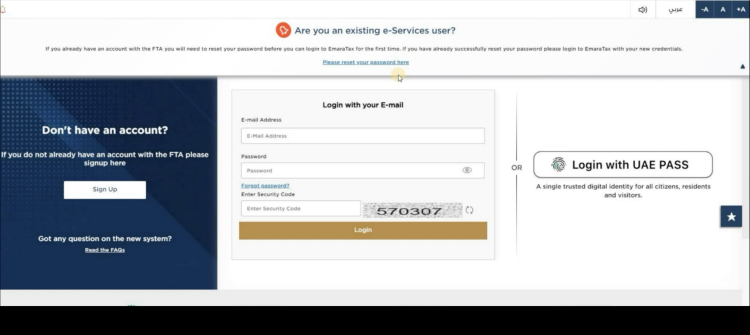
Log in using your registered email and password, or click Sign Up to create a new account by providing your details and verifying via OTP.
2. Create a Taxable Person Profile. Once logged in, check if your company name is already listed.
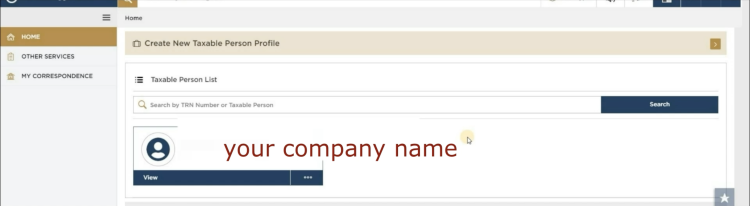
If not, click Create New Taxable Profile.
Enter your company name in both English and Arabic, then save to generate the taxable profile.
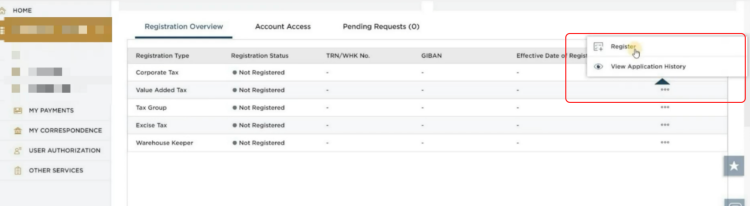
3. Start the VAT Registration Application. Under your newly created company profile, click View, click the action menu (three dots), and select Register.
Confirm that you have read the instructions and click Start.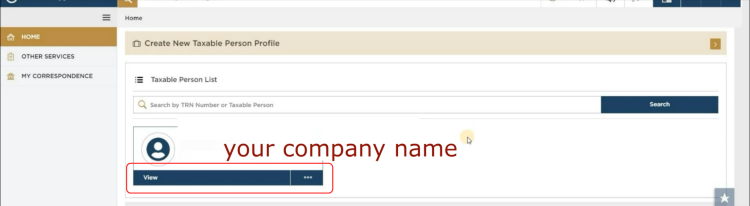
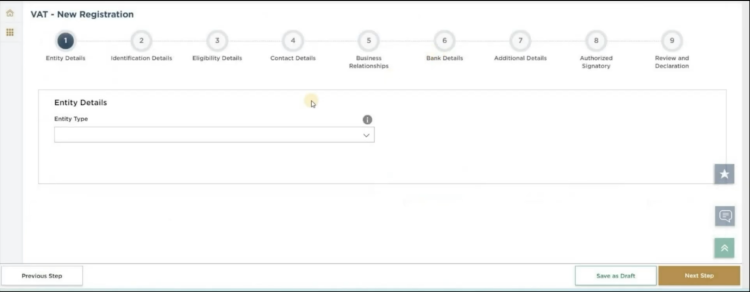
4. Enter Entity Details & Upload Trade License.
Select your entity type as specified on your trade license.
Provide the Date of Incorporation (or use the initial trade license issuance date).
Fill in the issuing authority (e.g., Dubai Economy and Tourism), trade license number, issuance date, and expiry date.
Enter the legal business name in English and Arabic.
Upload a PDF copy of your valid trade license.
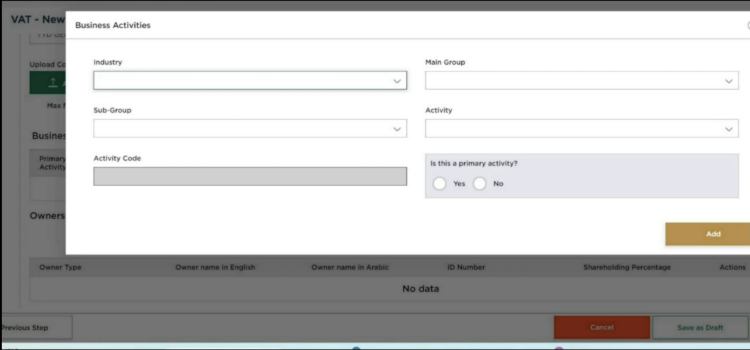
5. Add Business Activities & Ownership Information. Add your business activities by selecting the industry, main group, subgroup, and specific activity (or nearest relevant match).
Declare owner details: choose Natural Person for individual owners or Legal Person if owned by another corporate entity.
Enter all partners along with their respective shareholding percentages.
6. Declare Financial Thresholds (Voluntary vs Mandatory). Provide historical revenue/expenses for the last 12 months (or fewer months if the business is new).
Voluntary Registration: If your taxable sales or expenses exceeded AED 187,500 in the past 12 months—or are expected to cross AED 187,500 in the next 30 days—you can register voluntarily.
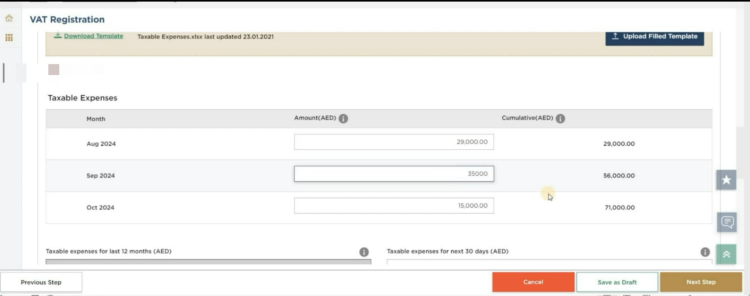
Prepare a month-by-month financial summary on company letterhead (signed and stamped) and upload it as supporting evidence.
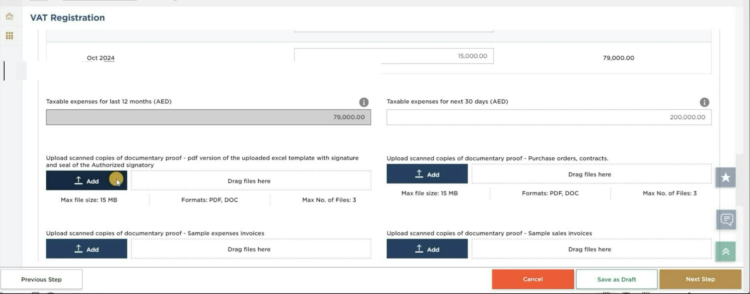
7. Provide Contact, Management & Bank Details. Enter primary contact details and business address information.
Provide details for the business manager/CEO and the authorized signatory.
Input your company’s corporate bank account details.
8. Review & Submit the Application. Thoroughly review all entered details and attached documents.
Submit the application. You will receive a confirmation message on the screen and via email.
Once you're done with all this,
FTA Review: If the FTA requests additional documents, log back into the portal, view the notification, and upload the required files.
Download VAT Certificate: Once approved, your status will change to active. You can download your official TRN (Tax Registration Number) Certificate directly from the top navigation bar of the portal.
Common VAT registration mistakes startups should avoid
Many VAT registration problems don't happen because VAT is too complicated. In many cases, the problem is simply that some information is missing, inconsistent, or entered incorrectly.
1. Waiting until the last moment
Some startups only start thinking about VAT when their turnover has already grown significantly.
It is better to keep an eye on your taxable turnover regularly. This helps you understand when you may need to register for VAT.
2. Miscalculating the registration threshold
Not every amount a business receives is automatically counted as taxable turnover for VAT registration.
You need to look at the type of supplies your business makes and the VAT rules that apply when checking whether you have reached the registration threshold.
3. Submitting incorrect information
When applying for VAT registration, the information provided to the FTA should be accurate and correct.
Incorrect or misleading financial information can cause problems and may lead to consequences under the applicable legislation.
4. Poor documentation
Missing or inconsistent documents can make the VAT registration process more difficult.
Before submitting your application, make sure your company and financial documents are complete and properly organised.
5. Ignoring the 30-day deadline
If your business becomes required to register for VAT, you should not delay the application. The registration application must be submitted within the applicable deadline.
How Right Way helps with VAT registration
For startups, VAT registration may look simple at first. But once you start preparing the application, you may have questions about the documents, turnover and eligibility.
At Right Way Accounting & Bookkeeping, we help you through the VAT registration process and make sure the required information and documents are in order.
Our support includes:
- Organizing the required documents
- Reviewing your turnover timeline
- Checking your VAT registration eligibility
- Preparing the application
- Submitting the application through the FTA's EmaraTax portal
- Following up on the registration process
- Helping you with your next VAT compliance requirements
Our VAT registration service starts from AED 650.
You also get support from a dedicated accountant, backed by 5+ years of experience and 500+ customer reviews.
When should a startup check its VAT registration status?
You don't need to wait until your business reaches AED 375,000 before you start checking your VAT position.
If your startup is growing quickly, keep track of your taxable turnover regularly. This makes it easier to see when you may need to register for VAT.
A simple monthly check can help you answer questions like
- How much taxable turnover have we generated?
- How much have we generated over the last 12 months?
- Are we expecting significant sales in the next 30 days?
- Are our invoices and accounting records properly maintained?
- Do we need to start preparing for VAT registration?
Regularly checking these things can help you avoid finding out too late that your business was required to register.
Frequently Asked Questions
Is VAT registration mandatory in the UAE?
For UAE-resident businesses, VAT registration is mandatory when the value of taxable supplies and imports exceeds AED 375,000 over the previous 12 months or is expected to exceed AED 375,000 within the next 30 days, subject to the applicable VAT rules.
What is the VAT registration threshold in the UAE?
The mandatory VAT registration threshold for UAE-resident businesses is AED 375,000. The voluntary registration threshold is AED 187,500, subject to the applicable conditions.
How long do I have to register for VAT after crossing the threshold?
The FTA states that a person who is required to register must submit the registration application within 30 days of becoming required to register.
Can a startup register for VAT before reaching AED 375,000?
Yes. A UAE-resident business may be eligible for voluntary VAT registration if it meets the voluntary registration conditions, including the AED 187,500 threshold.
Where do I register for VAT in the UAE?
VAT registration is completed through the Federal Tax Authority's EmaraTax platform.
How much does VAT registration cost?
The FTA's VAT registration service itself is free. However, professional accounting firms may charge a separate fee for preparing, reviewing and submitting the application.
At Right Way Accounting & Bookkeeping, our VAT registration service starts from AED 650.
Final thoughts
VAT registration is something a growing startup should keep track of instead of leaving it until the last minute.
The AED 375,000 threshold is important, but VAT registration is not only about checking a number. You also need to look at your taxable turnover, maintain proper records, prepare the required documents and provide accurate information to the FTA.
If you're not sure whether your Dubai business has reached the mandatory VAT registration threshold, getting professional advice early can help you avoid unnecessary compliance problems.
Need help with VAT registration in the UAE?
Right Way Accounting & Bookkeeping can help you check your VAT registration requirements, organize your documents, and submit your application through EmaraTax.
VAT registration from AED 650. Contact Right Way today to get started.